How to Plant Zucchini: Varieties, Spacing, Hills vs. Rows & More
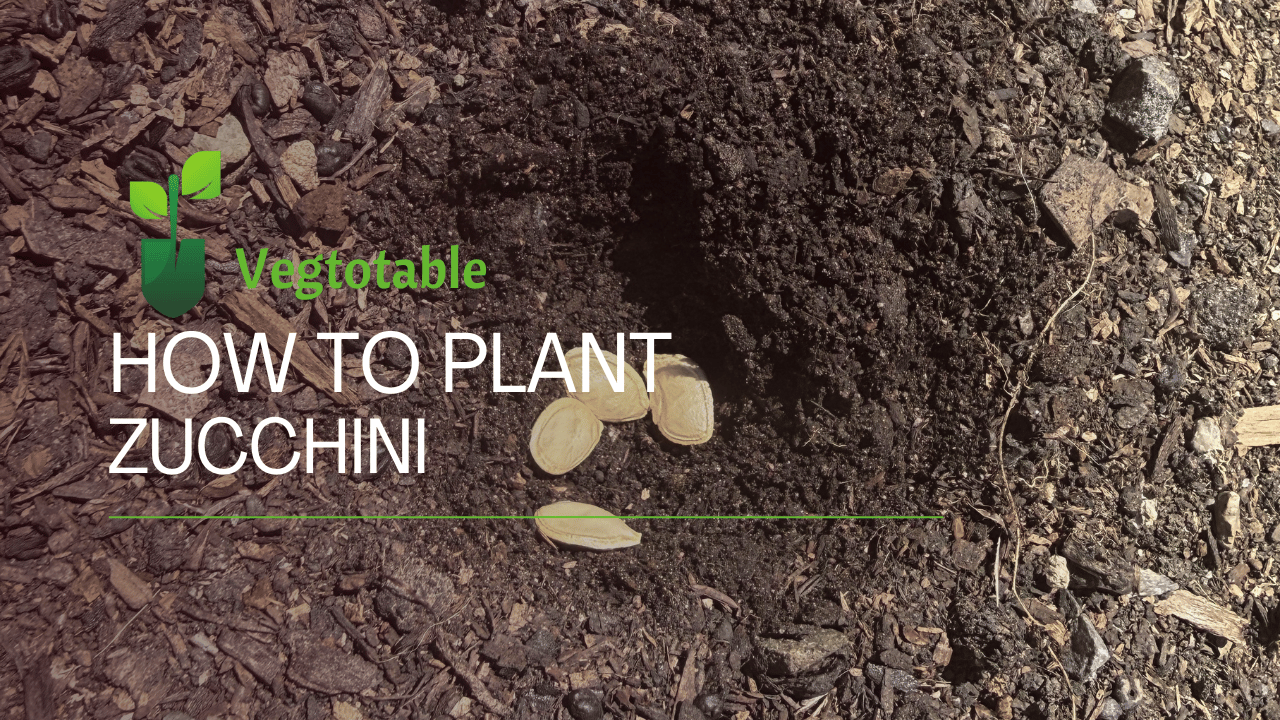
Here's the short version: put the seed in the ground. That's it. That's the whole secret.
I know that sounds like I'm skipping something, but I'm not. Zucchini is one of the most forgiving seeds you'll ever direct sow. It germinates fast. It grows fast. It doesn't want to be fussed over. My first year, I dropped seeds into barely-amended soil in a half-finished garden bed and walked away. Had zucchini in 60 days.
That said, there's a difference between zucchini that grows and zucchini that absolutely goes. A few decisions you make before the seed ever hits the dirt (variety, location, method, timing) make a real difference in what you end up with. Here's how I think through all of it.
Pick Your Variety First — It Changes Your Whole Plan
I used to think a zucchini was a zucchini. Then I planted a vining variety in a raised bed and spent the entire summer fighting it back from the tomatoes. Lesson learned.
The variety you choose changes your spacing, your method, and whether you can even grow it in a container. So this decision comes first.
There are two basic growth habits:
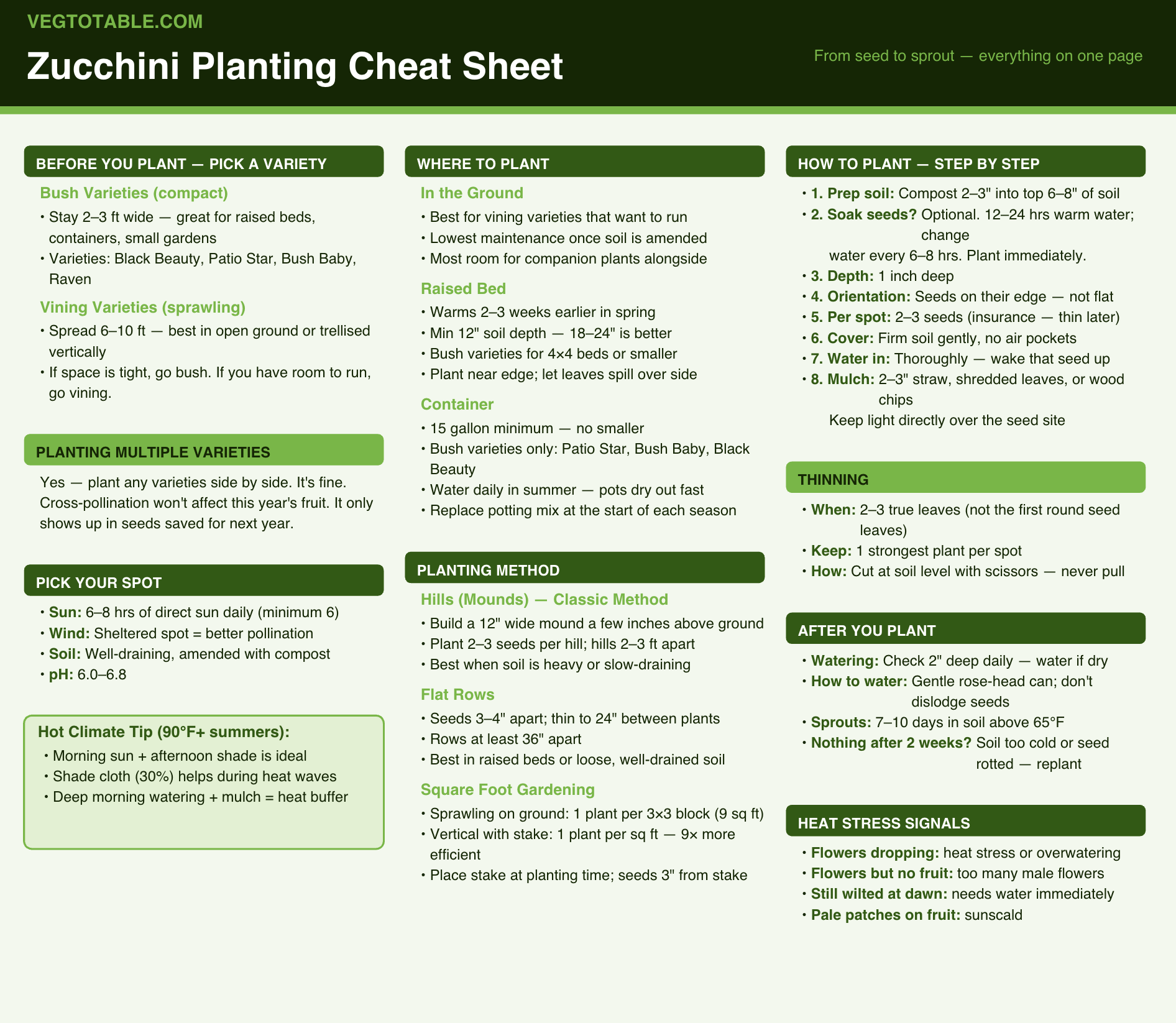
Bush varieties stay compact and tidy. Think Black Beauty, Patio Star, Bush Baby, Raven. These are the ones for raised beds, smaller gardens, and containers. They top out around 2–3 feet wide. Much more manageable.
Vining varieties sprawl. And I mean sprawl. Given enough room, they'll run 6–10 feet in every direction. They're great in open ground with lots of space, especially if you plan to trellis them vertically. Not so great if you're working with a 4x4 raised bed.
A good rule of thumb: if space is tight, go bush. If you've got open ground and room to let things run, vining varieties are prolific and often more forgiving in the heat.
For the full breakdown on varieties (colors, shapes, disease resistance, what each one's best for) check out my Types of Zucchini guide. It'll help you land on the right plant before you buy a single seed packet.
Can You Plant Multiple Varieties Together?
Yes. Plant whatever you want, side by side.
You'll hear people worry about cross-pollination, that if you plant two different zucchini varieties near each other, you'll end up with some kind of mutant zucchini. I believed this for longer than I'd like to admit. It's not true. At least not in the way people think.
Here's what actually happens: zucchini varieties can cross-pollinate with each other. Acorn squash, pumpkins, spaghetti squash; they're all in the same species. Bees carry pollen from one to another all day long and don't care even a little about your plans.
But here's the key part: it doesn't affect this year's fruit. The zucchini you pick off the vine this summer will look and taste exactly like it's supposed to. The cross only shows up in the seeds. If you saved those seeds and planted them next year, you might get something unexpected. Maybe fun, maybe not.
So for most of us, buying seed packets every year, not saving seeds, it genuinely doesn't matter. Plant two varieties. Plant three. Mix green and yellow. It's fine.
The only exception: if you're saving seeds and want to keep a variety true, you'd need to either plant just one variety or hand-pollinate and bag the flowers. That's a whole separate topic.
Choosing the Right Spot
Zucchini is not complicated about where it wants to live. It wants sun. It wants warmth. It wants room. Get those three things right and the rest mostly takes care of itself.
Sunlight
You're looking for at least 6 hours of direct sun a day. Eight is better. Less than 6 and you'll still get zucchini, but fewer of them, and the plant won't thrive the way it should.
Pick the sunniest spot in your garden. If you have to choose between a slightly shadier spot with great soil and a sunnier spot with average soil, take the sun every time. You can fix soil. You can't fix shade.
What About Heat? Can Zucchini Get Too Much Sun?
This is something most planting guides skip over, and I think that's a disservice, especially if you're gardening somewhere that gets genuinely hot in summer, like here in Southern California.
Zucchini has a sweet spot: 70–95°F. In that range, it's happy, it's producing, it's everything you want. Once you push past 90°F for days at a stretch, things start to go sideways.
Here's what heat stress actually looks like:
Tons of flowers, very little fruit. High heat pushes the plant to produce way more male flowers than female flowers. You need both for a zucchini to form.
Flowers dropping before they open. The plant is shedding them, stressed and going into survival mode.
Bees slowing down. Most bees pull back once temps hit 90°F. Less bee activity means less pollination, means less fruit.
Leaves drooping in the afternoon. Some of this is normal. If they're still wilted first thing in the morning, that's a real problem.
Bleached or papery patches on the zucchini itself. Sunscald from direct, intense sun on the fruit.
For most gardeners in most of the country, full sun is exactly right. But if you're somewhere that hits 95°F or above regularly through July and August, think Southern California, the Southwest, the deep South, afternoon shade becomes your friend, not your enemy.
The move is morning sun, afternoon shade. A spot that gets full sun until noon or 1pm and then catches shade from a fence, a wall, or a taller plant is actually ideal in a hot climate. The plant gets all the light it needs without baking through the worst heat of the day.
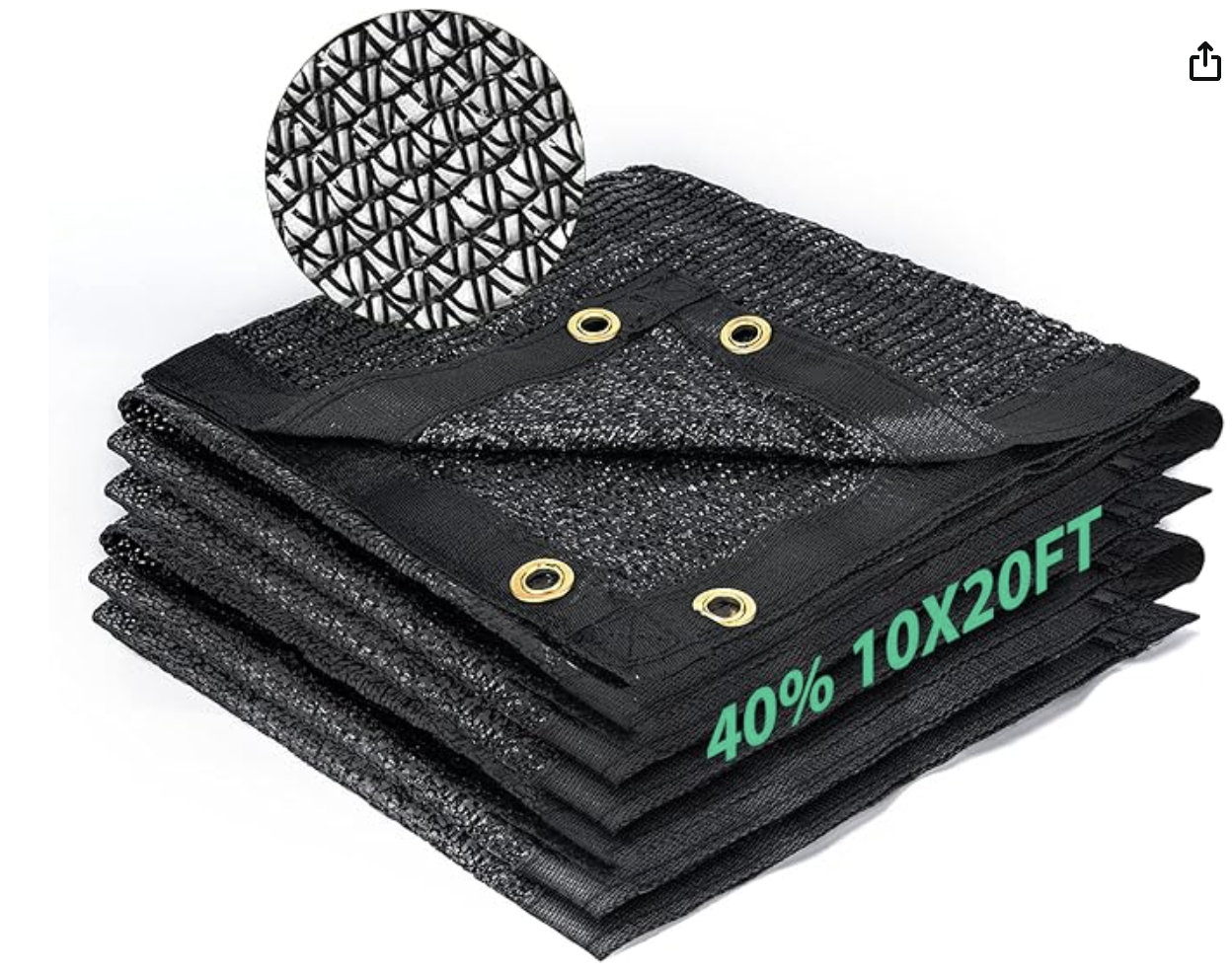
If you've already planted in full sun and a heat wave rolls in, don't panic. A shade cloth draped over the plants during peak heat can make a real difference, even a light 30% density one blocks enough intensity to help. Pair it with deep morning watering and thick organic mulch around the base, and most plants will ride out a heat wave just fine.
Wind
You want some shelter from strong wind if you can get it. Wind doesn't hurt the plant directly, but it messes with pollination. Bees don't like flying in heavy wind, and zucchini needs bees to set fruit. A spot near a fence or hedge that breaks the wind is a good thing.
Space
This depends entirely on your variety and your planting method, which we'll get into in a minute. But the short version: plan for more space than you think. I've crowded zucchini before. It's not worth it. Crowded plants get less airflow, more disease, and they fight each other for nutrients.
In-Ground, Raised Bed, or Container?
You've got three options. Each one works. Each one has tradeoffs. Here's how I think about them.
In the Ground
This is the most natural home for zucchini, especially vining varieties that want to run. You get unlimited root room, you don't have to water as often, and your plants will generally be bigger and more productive.
The downside is that you're working with whatever soil you have. If it's heavy clay or really compacted, you'll need to amend it before you plant. I cover that in the Best Soil for Zucchini guide. But once the soil is right, in-ground growing is low maintenance and very forgiving.
In-ground is also the best setup for companion planting. You have plenty of room to put marigolds, borage, and other helpful plants right alongside your zucchini without everything feeling crammed.
Raised Beds
This is how I grow most of my zucchini now, and honestly, I love it. You control the soil completely. Raised beds warm up 2–3 weeks earlier than in-ground in spring, which means earlier planting and earlier harvests. Drainage is better. Fewer weeds. Easier to harvest without kneeling in mud.
A few things to keep in mind for raised beds:
Aim for at least 12 inches of soil depth. Zucchini roots go deeper than people expect. 18–24 inches is even better if your bed allows it.
Stick to bush varieties if your bed is 4x4 or smaller. Vining types will take over. I learned this the hard way.
Plant near the edge of the bed and let the leaves spill over the side. It sounds obvious, but it frees up a lot of interior space for other plants.
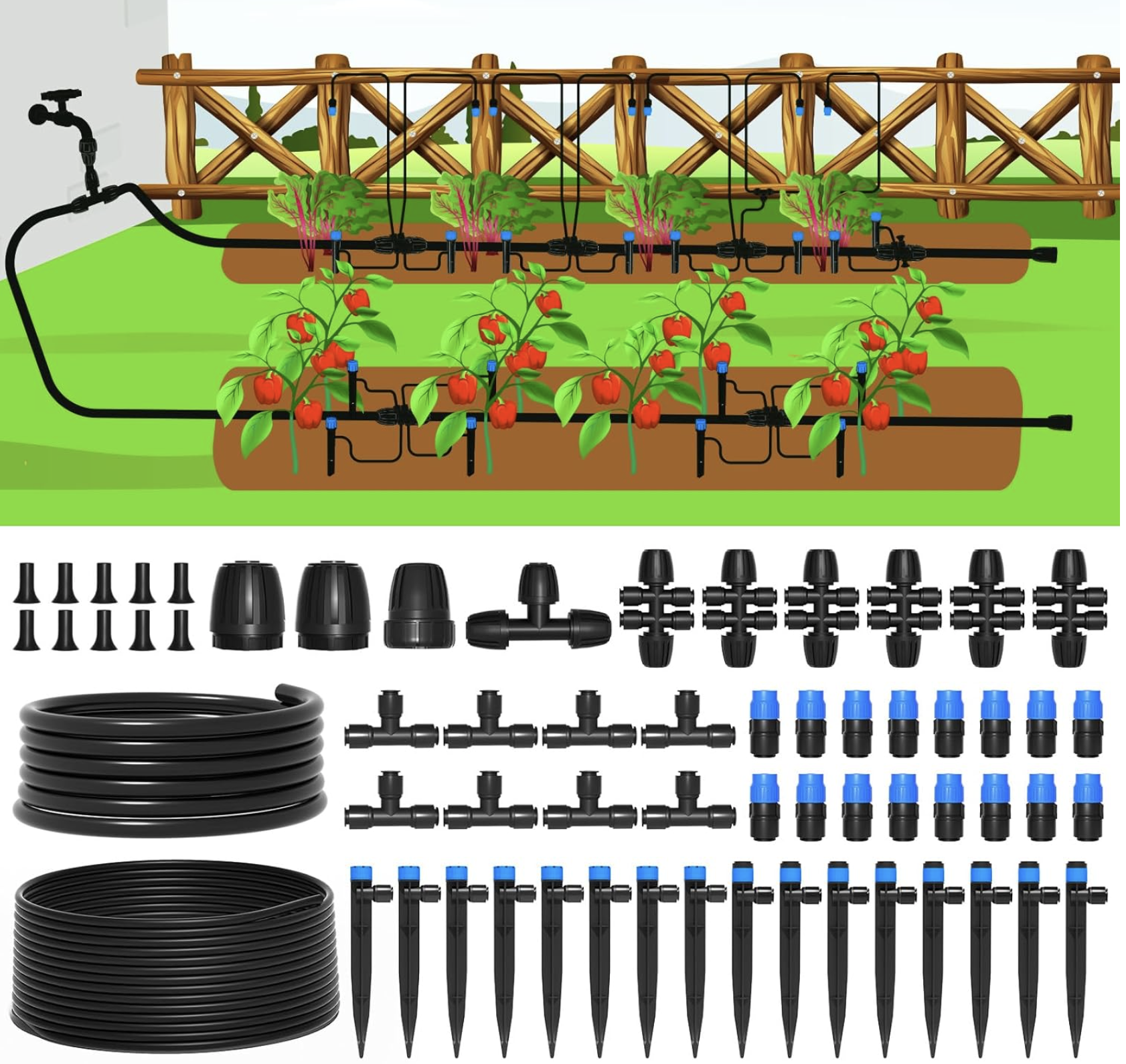
Raised beds dry out faster than in-ground, so you'll water more often, especially in summer. Using Ollas or running an automated drip line will save you from a lot of mistakes, or at least it’s saved me.
Containers
Yes, you can grow zucchini in a pot. I've done it on a patio. It works. But it requires more attention than in-ground or raised bed growing, and you have to be honest about the limitations.
Minimum container size: 15 gallons. Seriously, don't go smaller. Zucchini roots spread wide and they need the room. A 5-gallon pot will produce a struggling, unhappy plant.
Stick to compact bush varieties such as Patio Star, Bush Baby, Black Beauty, or Gold Rush. These are actually bred for smaller spaces and will do much better in a container than a vining type would.
The biggest challenge with containers is water. Pots dry out fast, especially in summer heat. In July, I'm checking my container zucchini every single day. Sometimes watering twice. And because watering flushes nutrients out of the soil, you'll need to fertilize more often than you would in-ground.
By the end of the season, the potting mix is pretty much spent. Plan to refresh it or replace it before next year.
For a full guide to container growing (pot selection, variety picks, watering and feeding schedules) see my Growing Zucchini in Containers guide.
Hills, Rows, or Square Foot — Pick Your Method
Once you know where you're planting, you need to decide how. There are three main approaches, and the right one depends on your setup.
Hills (Mounds)
This is the classic way to plant squash, and honestly, it's my favorite for in-ground planting. A hill isn't actually a big mound — it's a raised cluster of soil, usually about 12 inches across and a few inches higher than the surrounding ground. You plant 2–3 seeds right in the center.
Why do it this way? The raised soil warms up faster, drains better, and keeps the base of the plant from sitting in water. It's especially good if your native soil is heavy or slow to drain.
Space your hills 2–3 feet apart. Once seedlings emerge and hit their second or third set of true leaves, thin down to the strongest 1–2 plants per hill. More on thinning in a minute.
Flat Rows
If you're working in a raised bed with already-great soil, flat rows are perfectly fine. You skip the mounding and just plant seeds directly, 3–4 inches apart in a row. Once they're an inch or so tall, thin to your final spacing, about 24 inches between plants, with rows at least 36 inches apart.
Flat rows also work well in-ground if your soil is loose and drains well. If it's heavy or tends to hold water, hills are the better call.
Square Foot Gardening
Square foot gardening is all about maximizing what you grow in a small space, usually a raised bed divided into a grid. Zucchini is a bit of an awkward fit for classic square foot spacing because the plants get so big. But it can be done, and done well.
The key is vertical growing. If you're training your zucchini up a stake or trellis and pruning the lower leaves as it grows, you can fit a plant into as little as 2 feet of separation. Without staking, a traditional square foot gardening approach needs about 3 feet of spacing between plants, which is a lot of your grid.
With a stake, I plant my zucchini about 2 feet apart, and they do fine, but any closer and it really dwarfs their productivity.
Put the stake in the ground at planting time, right where the plant will be. Sow your seeds 3 inches away from the stake. As the plant grows, you guide the main stem up and tie it at intervals. It sounds fussier than it is. Once you've done it once, it's straightforward.
More on training zucchini vertically in my Growing Zucchini Vertically guide.
Prep the Soil Before You Plant
I'm not going to go deep on soil here because we have a whole guide dedicated to it. But there are a couple of things worth doing right before you drop seeds in the ground.
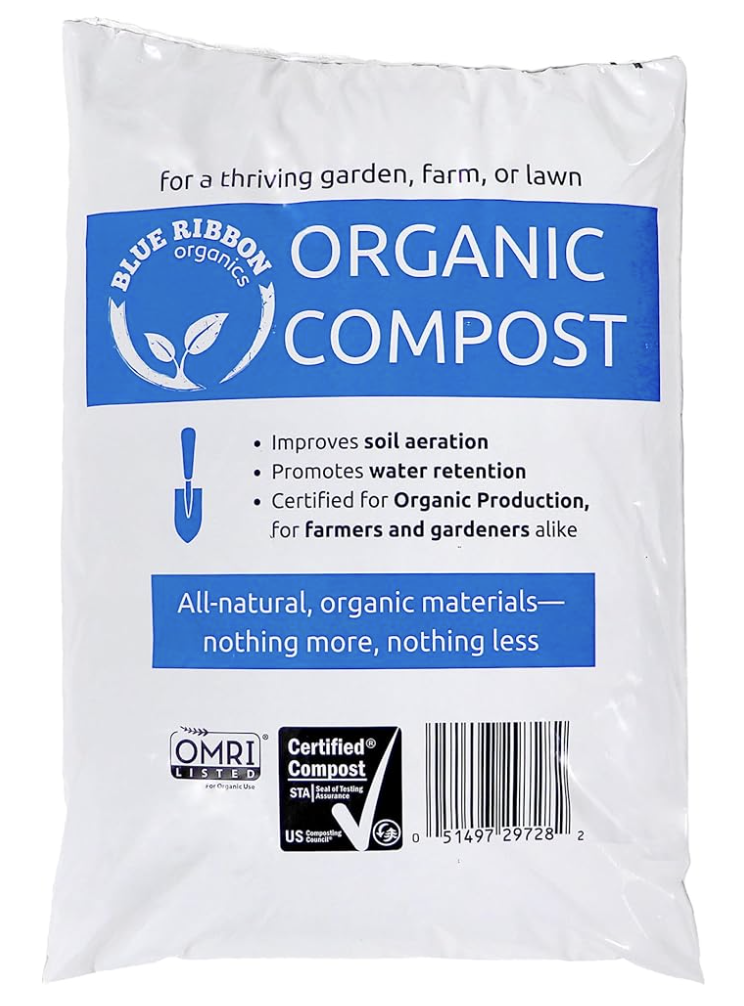
Work 2–3 inches of compost into the top 6–8 inches of your planting area. Zucchini is a heavy feeder. It wants rich, organic soil to grow into. This is the single biggest thing you can do to set the plant up for a good season.
If you want to go a step further: a few weeks before planting, dig a hole about a foot deep where each plant will go, fill it with compost, mix some back in with the native soil, and top it with a handful of organic fertilizer. Then let it sit. By the time you're ready to plant, you've created a little nutrient pocket that the roots will find and absolutely love.
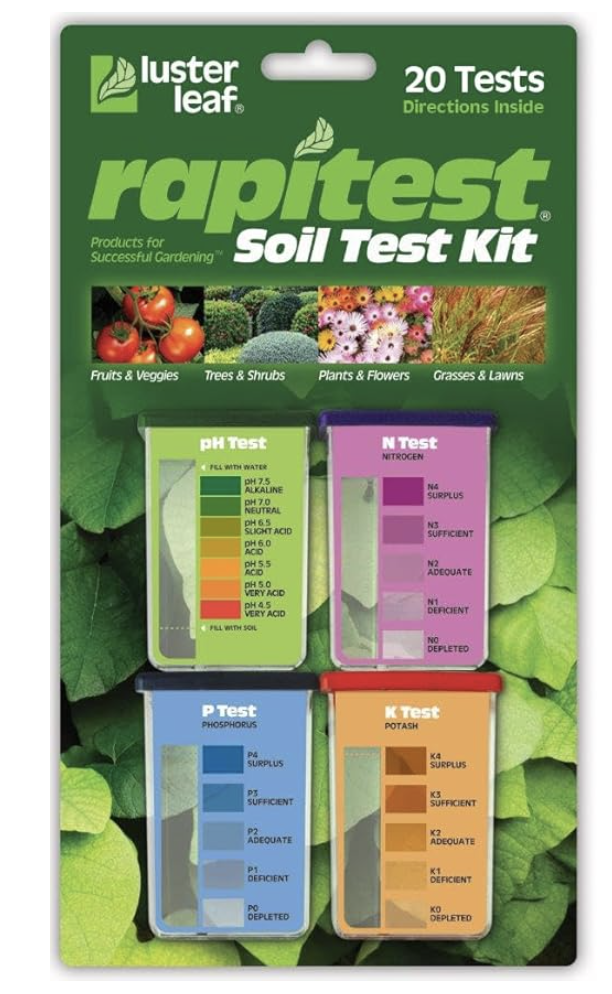
Target pH: 6.0–6.8. If you've never tested your soil and you've had struggles growing vegetables in a particular spot, it's worth a $15 test kit from the garden center or Amazon.
Should You Soak Your Seeds First?
You don't have to and I never do in my climate. Let's start there.
Zucchini germinates reliably on its own in warm soil. I've planted dry seeds every year and gotten perfectly good results. If the soil is at the right temperature and you keep it moist, most seeds are up in 7–10 days without any pre-treatment.
That said, soaking does speed things up. It softens the seed coat and gives the embryo a head start on moisture. Some gardeners swear they get sprouts 2–3 days earlier when they soak. I’ve never noticed much of a difference myself.
If you want to try it: soak seeds in room-temperature water for 12–24 hours before planting. Change the water every 6–8 hours so it stays fresh and oxygenated. Don't soak longer than 24 hours; you can actually waterlog the seed and hurt germination. Plant immediately after soaking. Don't let soaked seeds dry out before they go in the ground.
Honestly, I skip this step all the time. Warm soil does the job. But if you're racing the season or you've had a bad germination rate before, it's a low-effort thing to try.
How to Plant the Seeds
Alright. The actual moment. Here's exactly what I do.
Depth:
One inch deep. About the distance from the tip of your index finger to your first knuckle.
Orientation:
Plant seeds on their edge, not flat. This keeps water from pooling on top of the seed, which can cause rot before it ever germinates. Small thing, worth doing.
How many seeds per spot:
Two to three. Not one, not five. You're planting extras as insurance against seeds that don’t germinate and bugs that eat seedlings. Zucchini has a high germination rate so most will sprout, and you'll thin them later. The goal is to guarantee at least one strong plant per spot even if one seed is a dud or one gets eaten young.
Cover and firm:
Push the soil back over the seeds and firm it down gently with your palm. Not packed, just enough contact so the seed is fully surrounded by soil and not sitting in an air pocket.
Water in:
Water thoroughly right after planting. You want the soil wet all the way down, not just damp on the surface. This is the moment you're waking the seed up. Give it a proper drink.
Mulch:
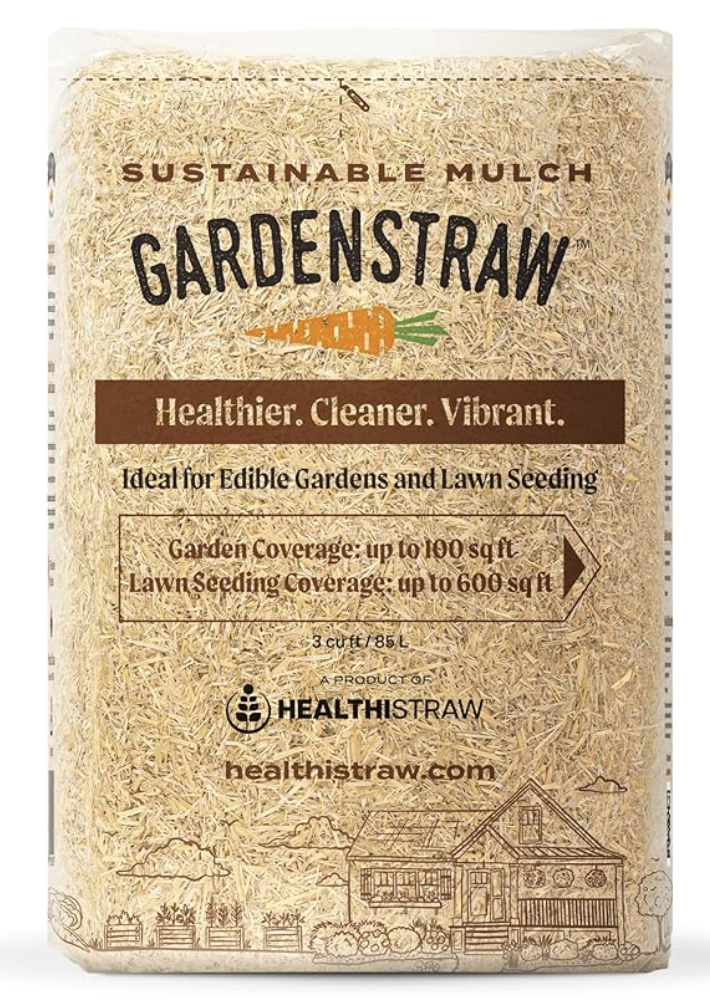
Add a layer of organic mulch right now, before you walk away. Two to three inches of straw, shredded leaves, or wood chips around the planting area keeps moisture in, moderates soil temperature, and cuts down on how often you'll need to water while waiting for sprouts. Keep it light directly over the seeds so emerging sprouts aren't fighting through a thick layer. Mulch everything around it.
Labels:
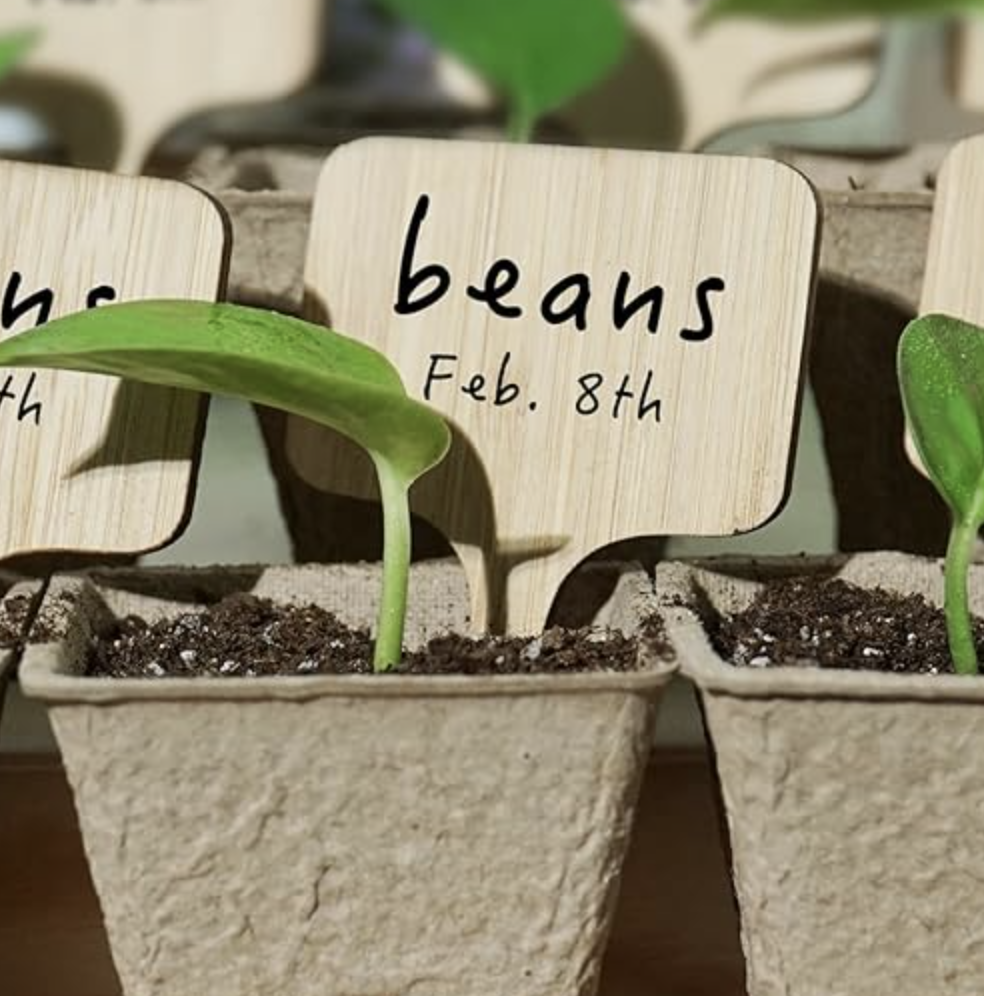
If you're only growing one variety, you probably don't need one. Zucchini sprouts fast and you'll know what it is. If you're trialing two or three varieties side by side, label them now. The seedlings all look nearly identical. Trust me, I have ruined a variety comparison by skipping this step and spending two weeks convinced I'd figured out which was which based on absolutely nothing.
After You Plant — Before They Sprout
The waiting window is 7–10 days in warm soil. Here's what to do in the meantime.
Watering:
Keep the soil consistently moist but not soggy. Stick a finger 2 inches into the soil every day or two. If it's dry at that depth, water. If it's still moist, leave it alone. In hot weather you may be watering every day. In mild weather, every couple of days is fine. Water gently so you don't wash seeds out of position. A watering can with a rose head is ideal.
Thinning:
Once your seedlings have 2–3 true leaves (the first leaves that look like actual zucchini leaves, not the rounded seed leaves that come up first), thin to one plant per spot. Pick the strongest-looking one and cut the others at soil level with scissors. Don't pull. Pulling disturbs the roots of the one you're keeping. I know it feels harsh. Do it anyway. Two plants fighting over the same root space will both underperform compared to one plant with room to spread.
What to expect:
In warm soil above 70°F, you'll see sprouts in 7–10 days. In cooler soil it can take two weeks. If it's been two weeks and nothing, the soil was probably too cold, or a seed rotted from too much moisture. Happens to everyone. Replant.
A Note on Companion Planting
If you're planning to grow companion plants, and I'd encourage you to, now is the time to figure out where they're going. Trying to plant companions after your zucchini is established means digging around roots you don't want to disturb.
My go-to companions at planting time: marigolds nearby to deter squash bugs and aphids, and borage or nasturtiums a little further out to pull in pollinators. Zucchini is completely dependent on bees to set fruit, so anything that gets more bees into that corner of the garden is a direct investment in your harvest.
For the full companion planting strategy (what to plant, where to put it, what to avoid) see my Zucchini Companion Plants guide.
What Comes Next
Seeds are in the ground. Soil is moist. Mulch is down. Now you wait.
In a week to ten days, you'll have seedlings. After that, the plant takes off fast. Zucchini goes from seedling to first fruit in about 50–60 days from germination. That's one of the things I love about growing it. You plant, you wait a week, and then it just goes.
From here, the next things to get right are germination (what to expect, how to read what's happening), watering (zucchini is thirsty but not in a complicated way), and pollination (the reason a lot of people think something's wrong when the plants are actually just fine). I've got guides for all of it.
Related guides:
Zucchini Germination — What to expect after you plant
Best Soil for Zucchini — Amendments, pH, and what zucchini roots actually want
How Much Water Does Zucchini Need — The watering rhythm from seedling to harvest
Types of Zucchini — Full variety guide to help you pick your plant
Zucchini Companion Plants — Who to grow alongside for a healthier harvest
Growing Zucchini in Containers — Full guide for patio and balcony growing
Growing Zucchini Vertically — Trellising for small space